Bar opening checklist
This bar opening checklist takes a bartender and shift manager from unlocking the door to the first order: security, taps and coolers, ice, glassware, garnishes, stock against par levels, the till float and a final walk-through.
Process flowchart
Step-by-step procedure
What you need
- Par level sheet
- Glass cloths and lint-free polishing cloths
- Ice scoop (never a glass)
- Citrus, herbs and other garnish stock
- Cutting board and knife
- Till float
- Spare syrup boxes and CO2 cylinder
- Out-of-stock board or list (the 86 list)
- 1
Unlock, disarm and check for overnight issues Bartender
Unlock, disarm the alarm and switch on the lights. Walk the whole bar: look for spills, broken glass, bottles left uncapped or anything out of place since closing. Check that fire exits are clear. Read the closing team's handover notes. Note any damage or missing items before you move on, and lock the entrance behind you until you open.
- 2
Check taps, fridges and soda gun Bartender
Pull a short test pour from every beer and cider tap and look for the right colour, a normal head and no off smell; wipe each spout afterwards. Check the bar fridges and cellar cooling show their normal temperature. Check the syrup boxes and the CO2 cylinder, then run a short burst of every soda gun flavour to confirm pressure and taste. Report anything faulty to the shift manager now, so there is time to call the brewery or an engineer before opening.
- 3
Fill the ice wells Bartender
Check that the ice machine is making clear, solid cubes and that its bin is filling. Fill the ice wells behind the bar using a scoop, never a glass and never your hands. If a glass breaks anywhere near an ice well, empty the whole well and clean it before refilling, because glass fragments are almost invisible in ice. Keep the scoop in its holder, not buried in the ice.
- 4
Polish and stock glassware Bartender
Unload the glass washer and polish the glasses with a clean, lint-free cloth. Check every glass for chips, cracks or cloudiness and take damaged ones out of service. Stock each glass type in its usual place up to the count on your par sheet, so nobody has to fetch glasses during the first rush. Leave a few clean glasses of each type in reserve behind the bar.
- 5
Prepare garnishes and bar tools Bartender
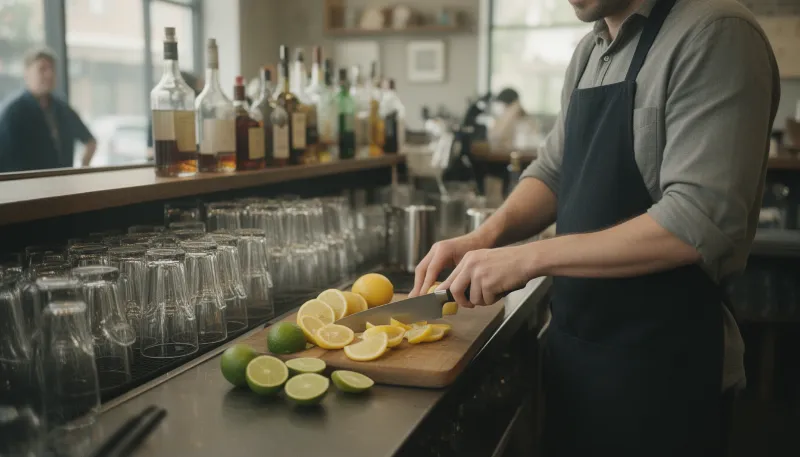
Wash citrus under running water, then cut wedges, wheels or twists as your drinks need. Rinse fresh herbs and keep them cool. Portion other garnishes into covered containers and keep perishable ones in the fridge until they are needed. Set out jiggers, bar spoons, strainers and shakers. Clean the board and knife after use, and date any prepared garnish you plan to keep for more than one shift.
- 6
Set lights, music and temperature Bartender
Turn on the bar and room lighting to the opening setting. Start the music at a volume that still allows conversation. Set the heating or air conditioning so the room is comfortable when the first guests arrive. Check that any screens or speakers you use for service are working.
- 7
Count key stock against par levels Bartender
Take the par level sheet and walk the back bar and fridges in the same order every day: spirits, wine, beer and cider, mixers, then smaller items such as straws, napkins and sugar. Note the current count next to each par number. A visual check of bottle levels is enough for spirits; full counts belong in your weekly or monthly stock take. Mark everything below par.
Is any key item below its par level? Bartender
- 8
Restock from storage or list as out of stock Shift manager only if needed
Go through the marked items with the bartender. Bring what is available from the store room and put it in its place behind the bar. If an item is completely out, write it on the out-of-stock board, often called the 86 list, and tell the team so nobody sells a drink you cannot make. Add the item to the next order.
- 9
Count the till float and test the card terminal Bartender
Count the float in the drawer and check it matches the amount your business sets. Write the total, your name and the time on the till sheet, and ask the shift manager to check it. Use the card terminal's own connection test, or check that it shows ready, rather than running a real payment. Make sure the receipt printer has paper. If the float is wrong or the terminal will not connect, tell the shift manager before you open.
- 10
Final walk-through and open Bartender
Step back and look at the bar the way a guest would. Wipe fingerprints off the counter edge and tap handles. Check the out-of-stock board is visible to the whole team, napkins and straws are stocked and bins have fresh liners. Read the handover notes once more for anything still open. Open the doors at the advertised time.
Checklist
About this procedure
A bar that opens with chipped glasses, a flat tap or an empty ice well loses credibility in the first ten minutes. This checklist exists so nothing depends on memory. The bartender works through every station in a fixed order, while the shift manager deals with stock shortfalls and checks the till float. By the time you finish, the bar is ready to pour without surprises.
The procedure assumes a typical pub or restaurant bar with an under-counter fridge, a few beer or cider taps, a soda gun, an ice machine and one till. Mechanical checks come first, so a stuck tap or a fridge that tripped overnight is found while there is still time to call someone. If your setup differs, for example a cocktail bar with more prep, add the extra steps where they fit.
Keep the checklist on a clipboard or tablet behind the bar. The bartender ticks each line as they go and the shift manager signs off the stock count and the till float. Expect 40 to 60 minutes from unlocking to the first pour.
Tips and common mistakes
Keep the par sheet where it is used
Fix the par sheet inside a back-bar cupboard door or on a clipboard behind the bar. If the bartender has to fetch the numbers from an office, the count gets skipped. Having the sheet in front of them while they work makes the count quick enough to do every day.
Do the mechanical checks first
A stuck tap or a fridge that tripped overnight can take a long time to fix. If you only find it after polishing glasses and cutting citrus, you have lost your opening window. Checking taps, fridges and the soda gun first gives you time to call the brewery or an engineer.
Write the 86 down
Saying that you are out of a spirit is forgotten in the first rush. Write it on a board where every member of staff can see it, and remove it the moment stock arrives, so you do not keep refusing a drink that is available again.
How to adapt this template
- Replace the example glass counts with your own par levels for each glass type, based on your menu and how busy your first hour is.
- List each tap or line separately if you want every pour tested and recorded on its own.
- Adjust the garnish step to your menu: a pub may only need lemons and limes, while a cocktail bar may prepare syrups and garnishes for a dozen drinks.
- Set your float amount and how the card terminal is tested according to your till and payment provider.
- If you run several shifts, decide which steps every shift repeats, such as ice and the till float, and which happen only at opening.
Laws and rules differ per country and region. Where a step depends on them, check what applies to your business before you use the procedure.
Frequently asked questions
How long should a bar opening checklist take?
For a typical pub or restaurant bar, plan 40 to 60 minutes for one bartender with the shift manager signing off. A cocktail bar with a lot of garnish prep can take longer. If it keeps running over, see which step takes longest; tasks such as polishing glasses or restocking may fit better in the closing checklist.
Do I need to count every bottle every morning?
No. A visual check of bottle levels is enough for the daily opening. Focus on the items that sell fastest and anything that ran out the night before. Full counts with measured levels belong in your weekly or monthly stock take.
What do I do if the ice machine is not working at opening?
Tell the shift manager straight away so they can call the engineer. Buy bagged ice from a supplier or shop for the day and keep it in a clean, covered ice well. Never use ice that has been stored in an open or dirty container, and never fill a well with a glass.
Should the bartender count the till float alone?
In a small bar the bartender usually counts the float because they are already at the till. The shift manager should check the count or the total on the till sheet before service starts. That gives a second pair of eyes on the cash without adding a third person to the opening.
More hospitality templates
Restaurant opening checklist and procedure
A daily opening procedure for restaurants, from unlocking the building to opening the doors: security, kitchen equipment and temperature checks, prep, dining room setup and a short team briefing. Written for the opening manager and the first shift.
Restaurant closing checklist
This restaurant closing checklist walks your team through the final hour of service to lock-up: clearing tables, breaking down the kitchen, storing food safely, counting takings, and securing the premises.
Receiving food deliveries procedure for restaurant kitchens
A kitchen receiving routine that covers checking chilled and frozen temperatures, matching the delivery to the order, inspecting packaging and dates, rejecting faulty goods, storing stock first-in-first-out and logging problems with the supplier.