Handling customer complaints in a restaurant
A table-side process for servers and floor managers to acknowledge a guest complaint, fix it within their authority or escalate, check that the fix worked and log the issue so recurring problems get solved.
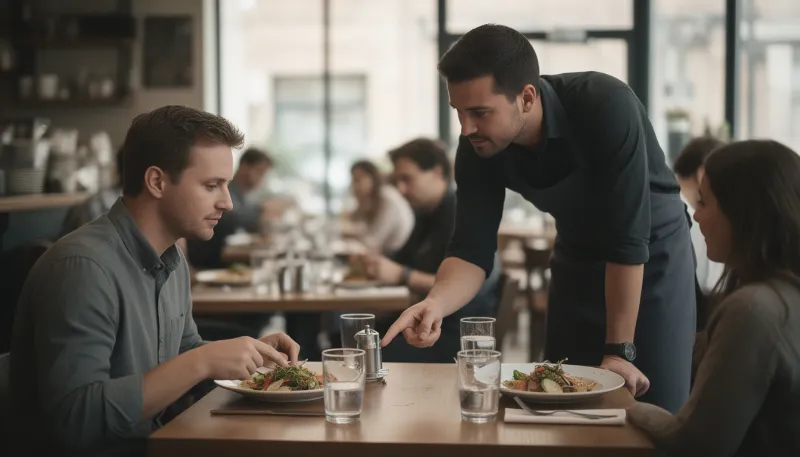
Process flowchart
Step-by-step procedure
What you need
- Complaint log or shift notebook at the host stand
- Pen
- Till access for corrections, or a manager who has it
- Agreed list of what servers may offer without a manager
- 1
Stop and listen without interrupting Server
Put down what you are carrying, turn towards the guest and let them finish. Do not defend the kitchen or explain while they are still talking. Note which dish or drink and which guest it concerns. If the guest mentions an allergic reaction, feeling unwell or something found in their food, get the floor manager immediately: that is a safety issue, and breathing difficulty or swelling means calling the emergency services.
- 2
Apologise and confirm what went wrong Server
Say something simple, such as I am sorry, that is not how it should be. Do not add a but after the apology. Then repeat the problem in one sentence to check you understood: so the salmon arrived cold and the rice was undercooked, is that right? This lets the guest correct you before you offer a fix. Never blame a colleague or the kitchen in front of the guests.
Can you fix this within what a server may offer? Server
- 3
Bring the floor manager to the table Server only if needed
Find the floor manager and brief them in two sentences: what the guest said and what you have already tried. Aim to have the manager at the table within a minute or two. Introduce the manager to the guest, then return to your section unless the manager asks you to stay. If the manager is busy with another table, tell them it is a complaint so they can come as soon as possible, and let the guest know someone is coming.
- 4
Offer one specific fix Server
Name one exact action instead of a list of options: I will have a fresh salmon made now and take the rice off your bill. A server typically may remake a dish, swap a drink, remove an item from the bill or offer a dessert; a floor manager can offer more, such as taking a whole course off the bill. Only promise a time if the kitchen has confirmed it. Avoid let me see what I can do; commit to what will happen.
Does the guest accept the fix? Server
- 5
Widen the offer or involve the owner Floor manager only if needed
If the guest is not satisfied, do not argue. Acknowledge their point and widen the fix one step, for example taking the whole meal off the bill or offering something for the table. If they still refuse, tell them calmly that you want to put it right and offer contact with the owner, now or later. Stay polite even if the guest is not; you never have to accept abuse, and serious threats are a matter for security or the police.
- 6
Pass the correction to kitchen and bar Server
Take the corrected order to the pass yourself instead of relying on a runner, and say exactly what changed: table 12, remake the salmon, cancel the rice. If an item comes off the bill, make the correction in the till straight away so the guest does not get a wrong bill. If the complaint involved something found in the food, keep the dish aside for the manager instead of throwing it away.
- 7
Check back with the table Server
Note the time and bring the corrected item yourself when it is ready. Check briefly that it is right and whether the rest of the table is happy. If the bill is being adjusted, confirm it before they ask for it. If the guest still looks unhappy, do not debate at the table; tell the floor manager. The check-back is what turns a complaint into a meal the guest remembers as well handled.
- 8
Log the complaint Floor manager
By the end of the shift, write a short factual entry: date, table, what was wrong, what fix was given, who handled it and whether the guest accepted. Record safety complaints, such as illness or something found in food, in full, including what the guest ate. If the same dish or issue comes up several times in a week, raise it at the next team briefing so the cause gets fixed. The log is for spotting patterns, not for blaming people.
Checklist
About this procedure
Most complaints at a restaurant table can be fixed on the spot if the server acts quickly and knows exactly what they are allowed to offer. This procedure gives your team one path from the moment a guest says something is wrong to the moment the issue is logged and the manager knows what happened. It covers food that arrives cold, the wrong dish, a long wait, an unfriendly interaction or a mistake on the bill.
The server handles the first moves: listen, apologise and confirm the problem. If the fix is within what the server may offer, such as remaking a dish, swapping a drink or removing an item from the bill, they do it straight away. Anything beyond that goes to the floor manager, who can offer more and involve the kitchen.
The goal is not to win an argument. It is to make the guest feel heard, fix the specific problem and get back to normal service quickly, so the rest of the table is not left waiting. A complaint about an allergic reaction, illness or something found in the food is a safety matter and goes to the manager at once.
Tips and common mistakes
Keep the apology short and real
Guests notice a script. A short, plain I am sorry, that should not have happened works better than a polished speech. The fix you offer matters more than the words around it, and a brief pause while you think is fine as long as you then say what happens next.
Remember the rest of the table
A complaint at a table of six can make the other five uncomfortable. Deal with the issue quickly and check with the others that everything else is fine while you sort it out, so the whole table does not lose the mood while one dish is remade.
Agree the server's limits in advance
In the pre-shift briefing, agree exactly what a server may offer without a manager, for example remaking one dish, swapping one drink or removing one item. When a server is unsure, they should involve the manager rather than guess; a short walk is cheaper than a wrong fix.
Log patterns, not people
A log entry should say risotto undercooked, table 8, remade, not name a cook as the problem. Patterns in dishes and processes can be fixed; blaming individuals in a shared log only stops people reporting the next issue.
How to adapt this template
- Write down your server's limit, for example one remade dish and one drink swap without a manager, so the decision step is clear for new staff.
- Set your check-back time to your service style: a long tasting menu allows a slower check-back than a quick lunch.
- Add an extra escalation level if you have a general manager on site before the owner is involved.
- Describe how bill corrections are made in your till, so servers know whether they can void an item or need a manager.
- Decide where the complaint log lives and who reviews it, for example a book at the host stand reviewed weekly by the owner.
Laws and rules differ per country and region. Where a step depends on them, check what applies to your business before you use the procedure.
Frequently asked questions
What if the guest demands the owner and refuses every fix?
Do not argue at the table. Bring the floor manager, who explains what has been offered. If the owner is on site, they can come over; if not, offer the owner's contact details or a call back. You cannot force a guest to accept a fix, but make sure they leave with a clear, polite final offer.
Can a server take a whole meal off the bill?
In most small restaurants, no. Servers usually decide on one item or one course, and larger reductions go to the floor manager because they affect the takings and need a till override. If your restaurant draws the line elsewhere, agree it in the pre-shift briefing so every server knows.
What if a guest says the food made them ill or caused an allergic reaction?
Take it seriously and involve the manager at once. Signs such as breathing difficulty, swelling or collapse mean calling the emergency services immediately. Do not argue or guess at the cause. Note what the guest ate, keep any remaining food aside, check the dish's allergen information and follow your local food safety rules for reporting.
Should we give something for free every time someone complains?
No. Fixing the actual problem comes first: a fresh dish, a correct drink, a corrected bill. Something extra is a tool for when the experience was clearly spoiled, not an automatic reward. Agree a consistent policy so guests are treated alike and the team does not have to guess.
More hospitality templates
Restaurant opening checklist and procedure
A daily opening procedure for restaurants, from unlocking the building to opening the doors: security, kitchen equipment and temperature checks, prep, dining room setup and a short team briefing. Written for the opening manager and the first shift.
Restaurant closing checklist
This restaurant closing checklist walks your team through the final hour of service to lock-up: clearing tables, breaking down the kitchen, storing food safely, counting takings, and securing the premises.
Receiving food deliveries procedure for restaurant kitchens
A kitchen receiving routine that covers checking chilled and frozen temperatures, matching the delivery to the order, inspecting packaging and dates, rejecting faulty goods, storing stock first-in-first-out and logging problems with the supplier.