Your daily coffee shop opening checklist
A complete pre-opening procedure for a small coffee shop or cafe, covering machine warm-up, dial-in, stock checks, cleaning, till setup, and final walk-through before the first customer arrives.
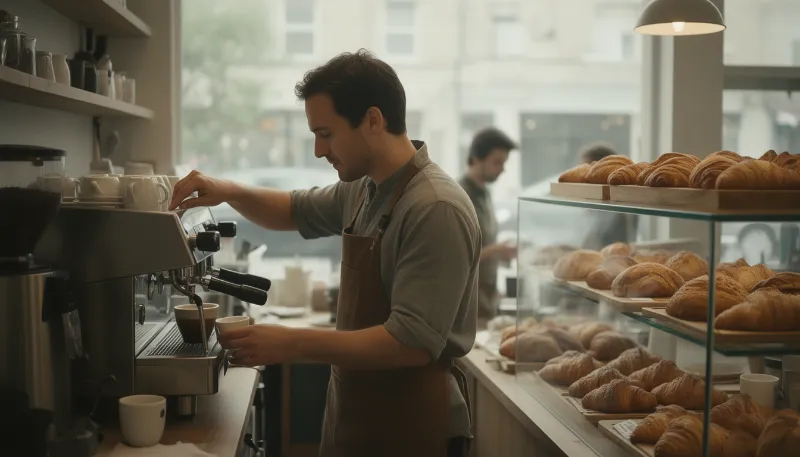
Process flowchart
Step-by-step procedure
What you need
- Digital scale (0.1 g) and a timer for espresso shots
- Bar card with the dial-in recipe and last grinder setting
- Fridge thermometer and temperature log
- Pastry display trays and tongs
- Microfibre cloths and food-safe surface cleaner
- Till float in a sealed bag, with its count sheet
- Menu board markers or chalk
- 1
Unlock and power on building systems Shift manager
Disarm the alarm with your personal code; never keep the code written down near the door. Before going further, look for signs of a break-in such as forced doors or broken glass. If you see any, step back outside and call the police instead of going in. Unlock the staff and front doors, switch on the lights and set the heating or air conditioning for the shop floor. Walk the whole shop once and look for leaks under sinks, anything left on overnight and anything that looks wrong, and note it before you start prep.
- 2
Warm up espresso machine and grinder Barista
Switch on the espresso machine and let the boiler reach brewing temperature; most machines show this with a light or a steady pressure gauge. Lock the empty portafilters into the group heads so they warm up too. Switch on the grinder. Once the machine is hot, flush each group head with hot water for five to ten seconds and purge the steam wand into a cloth or purge jug. Warm-up usually takes 15 to 20 minutes, so do the stock and cleaning steps while you wait if you are alone. Do not pull shots until the machine is fully up to temperature.
- 3
Pull test shots and weigh them Barista
Grind two or three shots' worth and throw them away to clear yesterday's coffee from the grinder. Weigh your dose into a warm portafilter (for example 18 g), distribute, tamp level and pull a double shot with the timer running. Weigh the coffee in the cup and compare it with your bar card recipe, for example 36 g in 25 to 30 seconds. Taste it. Note the dose, yield and time on the bar card so you can see what changed if you need to adjust.
Do all shots hit your target dose, yield, and taste? Barista
- 4
Adjust grind size and retest Barista only if needed
If the shot ran fast (the target weight came too early) and tastes sour or thin, grind finer by a small step. If it ran slow and tastes bitter or harsh, grind coarser. Change one thing at a time, purge a little coffee after each change, then pull, weigh and taste again. If one group head behaves differently from the other with the same grind, the problem is that head, not the grind: check the shower screen and gasket and use the other head until it is fixed. Write the final grinder setting on the bar card for the next shift.
- 5
Check fridges, stock milk and pastries Barista
Check that the bar fridge reads 5 °C or below and write the temperature on the log. Fill it with milk from the walk-in or the delivery up to your opening level, oldest date at the front. Throw away anything past its use-by date and note it for the next order. Milk stays in the fridge; take out only the jug you are about to steam. Fill the pastry case with today's batch, check each item for damage, label allergens where your local rules require it and put tongs in the case. If pastries are delivered, check the count against the delivery note before you sign.
- 6
Wipe down bar, counters, and seating Barista
Using a food-safe surface cleaner diluted as stated on the product label, wipe down the entire bar top, the espresso machine exterior (do not get water into the electronics or group head seals), the grinder hopper exterior, the till counter, and any customer-facing surfaces. Move to the seating area: clear crumbs from tables and chairs with a brush or dry cloth first, then damp-wipe. Wipe down door handles, light switches, and the menu rail. Empty any overnight bins and replace liners. The standard is that no visible residue or smell remains when you run your hand across a surface.
- 7
Set up menu boards and specials Shift manager
Check the chalkboard or digital display for today's menu. Confirm prices match your current price list, update any seasonal specials or limited items, and make sure allergen information is visible where local food safety rules require it. If you run a daily special such as a rotating latte art drink or a pastry of the day, write it in clearly with the price. Step back and read the board as a customer would: no crossed-out prices, no smudged chalk, spelling correct. If the board is digital, confirm the screen is on and displaying the right file.
- 8
Count till float and test card terminal Shift manager
Count the till float from the sealed bag, note by note and coin by coin, and compare it with the amount on the count sheet. Do not mix in tips or money from another drawer. Check that the card terminal is switched on, connected and shows it is ready, and that the receipt printer has paper; you do not need a test payment. Put the float in the drawer and close it.
Does the till float match the register sheet? Shift manager
- 9
Recount and log any discrepancy Shift manager only if needed
Count the float a second time slowly, separating notes by denomination. Check for a bill stuck between coins or a note folded in the wrong slot. If the total still does not match, write down the exact difference, the time, and your name on the till log sheet. Do not top up from personal funds or pull from another drawer to make it even; note the variance and continue with service. Flag it for the owner or accountant at end of day. A small discrepancy of a few coins is normal; anything larger should be investigated before the next shift.
- 10
Final walk-through and open for service Shift manager
Do one last circuit as a customer would experience it. Check: front door unobstructed, mat flat, music at a reasonable level, restrooms stocked, queue area clear, and the first cup can be made without reaching for anything missing. Confirm the barista is ready with milk, cups, and lids in place. Flip the door sign to open or set the digital display. Note the actual opening time on the daily log. From this point the team is trading; any remaining prep such as extra pastry happens during the first quiet lull, not before doors open.
Checklist
About this procedure
This coffee shop opening checklist walks your team through every task between unlocking the door and flipping the sign to open. It is written for a small cafe or espresso bar with one or two baristas and a shift manager who handles the till, menu boards, and final sign-off. The whole routine should take 40 to 60 minutes, so plan to arrive at least an hour before your first scheduled service.
The critical part of the routine is dialing in the espresso machine. A grinder that was left on yesterday's setting will produce shots that are too bitter or too sour, and you will lose customers before the morning rush peaks. The checklist builds in a weigh-and-taste loop so no one opens for service until every group head is hitting your target recipe.
Print this page or load it onto a tablet at the bar. Each step has a short checklist line so the person doing the task can tick it off as they go. If you run two shifts, repeat the dial-in and stock steps at the second opening.
Tips and common mistakes
Keep a dial-in log at the bar
A small notebook or whiteboard where the barista writes the final grind setting, dose, and yield after each morning's dial-in saves five to ten minutes the next day. The grinder remembers its position, but baristas forget. Two lines of writing prevent a full retest cycle.
Let the closing shift set you up
Most of a slow opening is caused the night before. Ask the closing shift to leave clean portafilters, a full cup and lid stock, an empty dishwasher and a note of anything that ran out. Then the opener can focus on the machine and the fridges.
Keep a spare group head gasket and shower screen
The most common reason a group head will not dial in is a worn gasket or a dirty shower screen. Keep one spare of each per machine in a labelled drawer. Change them with the machine switched off and cooled down, never on a hot group head.
Assign the till float to one person only
If two people count the float, you get two answers and an argument. The shift manager counts it alone, writes it on the count sheet and closes the drawer. Anyone else who needs the till asks the manager first.
How to adapt this template
- Replace the generic 'target dose and yield' language with your actual numbers (for example, 18 g in / 36 g out / 27 seconds) so the barista is checking against a real figure, not a concept.
- Adjust the milk and pastry par levels to match your counter size and expected morning volume. A four-table cafe needs two crates of milk; a drive-through with a queue bay needs five.
- Add or remove steps if you run a kitchen (soup prep, sandwich assembly) or do not sell pastries at all. The dial-in and till sections stay the same either way.
- Set your specific alarm code location, till float amount, and card processor test-card procedure so the checklist matches your actual security setup rather than a generic one.
- If you have a second service (lunch or afternoon), copy the dial-in, stock, and cleaning steps into a shorter midday version and reference it from this morning page.
Laws and rules differ per country and region. Where a step depends on them, check what applies to your business before you use the procedure.
Frequently asked questions
How long should the espresso machine warm up before dialing in?
Most commercial two-group machines need 10 to 15 minutes from cold to reach a stable brewing temperature. You will know it is ready when the boiler gauge or indicator light stops changing and you can pull a shot that holds its pressure without dropping. If your machine has a pre-infusion or PID setting, follow the manufacturer's startup sequence rather than guessing by time.
What do I do if one group head dials in but the other will not?
Swap the portafilters between the heads first, to rule out a worn basket. If the problem stays with the head, look at the shower screen for coffee build-up and the gasket for cracks. Backflush that head with a blind basket and machine cleaner, then backflush several times with clean water before pulling a shot to taste. If it still runs differently, take that head out of use and serve from the other one until a technician has looked at it.
Do I need to re-dial in if we close for lunch?
If you close for an hour or two and nobody touched the grinder, pull one test shot when you reopen to confirm it still runs to recipe. After an overnight close, or when the grinder was off, do the full dial-in again: the grind drifts as the grinder cools and the beans age.
Who is responsible if the till float is short at closing?
Check your local rules or your accountant for how cash discrepancies should be recorded and who bears the loss. As a practical matter, the shift manager who logged the variance at opening is the one who flags it; the owner decides whether it is absorbed as shrinkage or investigated further. The key is that the discrepancy was noted in writing at the start of the shift, not discovered for the first time at close.
More hospitality templates
Restaurant opening checklist and procedure
A daily opening procedure for restaurants, from unlocking the building to opening the doors: security, kitchen equipment and temperature checks, prep, dining room setup and a short team briefing. Written for the opening manager and the first shift.
Restaurant closing checklist
This restaurant closing checklist walks your team through the final hour of service to lock-up: clearing tables, breaking down the kitchen, storing food safely, counting takings, and securing the premises.
Receiving food deliveries procedure for restaurant kitchens
A kitchen receiving routine that covers checking chilled and frozen temperatures, matching the delivery to the order, inspecting packaging and dates, rejecting faulty goods, storing stock first-in-first-out and logging problems with the supplier.