Lost and found procedure for shops
This procedure covers how shop staff collect, log, store, and return lost property, including how to handle valuables and ID documents separately. It is written for small retail teams of three to fifty people.
Process flowchart
Step-by-step procedure
What you need
- Clear plastic bags or evidence-style pouches
- Permanent marker for bag labels
- Lost property register (paper sheet or shared spreadsheet)
- Lockable box, small safe, or locked drawer for valuables
- Labelled shelf or bin behind the counter for standard items
- Disposal log line in the register
- 1
Collect and bag the item Shop assistant
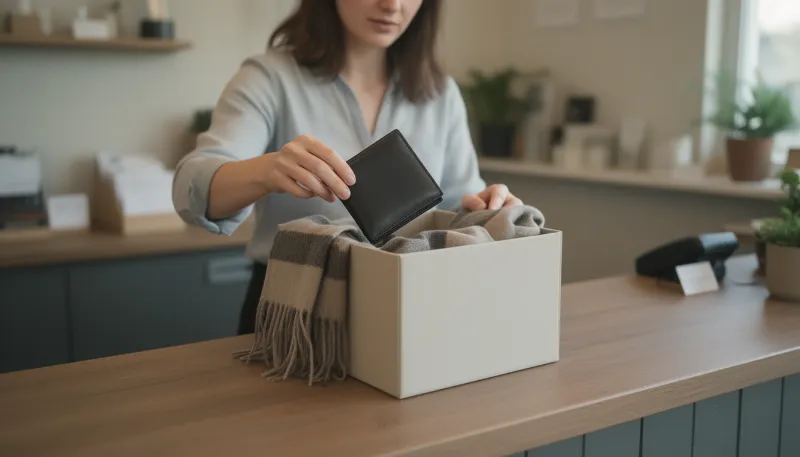
Pick up the item using clean hands or gloves if it looks messy. Place it in a clear plastic bag or evidence-style pouch so you can see what it is without opening it. Write on the bag with a marker: date, time found, and location in the shop (for example, '14 Jun, 11:20, fitting room 3'). If the item is dirty or wet, note that on the bag. Do not open wallets, phone cases, or sealed packaging to look inside.
- 2
Log the item in the lost property register Shop assistant
Open your lost property log (a paper sheet behind the counter or a shared spreadsheet). Record: item description (colour, brand, size – do not list contents of a wallet), date and time found, exact location, name of staff member who found it, and the bag label reference. Assign a simple sequential number to each entry so you can match it to the physical bag later. Keep the register in one fixed spot so the next shift finds it immediately.
Is the item a wallet, ID document, or obvious valuable? Shift manager
- 3
Store valuables and ID documents separately Shift manager only if needed
Place the bagged item in a lockable box, small safe, or locked drawer that only management can access. The label on the bag should show only the item number, date, and a generic description such as 'wallet – brown leather'. Do not write names of contents, card numbers, or IDs on the outer label. Log the storage location in the register. If you have CCTV covering the area where the item was found, note the camera reference so you can pull the footage later if a claim comes in.
- 4
Store in the standard lost property area Shop assistant only if needed
Place the bagged item on a shelf, in a labelled bin, or on a hook behind the counter designated for lost property. Keep items grouped by date so older ones are easy to spot during review. The area should be out of customer sight but accessible to any staff member. Do not store food items here – if someone leaves a sandwich or drink, dispose of it the same day following your hygiene and waste rules.
- 5
Check for an immediate owner at the till Shop assistant
Over the rest of the shift, keep an eye out for a customer asking about a lost item. If someone asks, let them describe what they lost first, without prompting: do not describe the item to them. Ask for details you would not write on the register, such as what is inside a wallet or what the phone case looks like. If their description fits, pass the claim to the shift manager for formal verification. Tell the next shift about any new item at handover.
Has someone claimed it and described specific details? Shift manager
- 6
Verify ownership and hand over the item Shift manager only if needed
Ask the claimant to describe the item in detail: contents if it is a wallet, specific markings, brand, anything unique. Compare their description against what you logged and what is physically on the item (open the bag in front of them). For ID documents or bank cards, also ask for photo ID in the same name. If it matches, ask them to sign the register as 'returned to owner' with date and time, then hand over the item. If they cannot verify details convincingly, do not release it – log the claim attempt with a timestamp and keep holding.
- 7
Hold the item and note the review date Store manager only if needed
The item stays in storage for the holding period you have set. Check what your local rules require for different item types, or follow your own written business policy. In the register, write the review date next to the entry. If a claim comes in during the holding period, route it through the verification step above. Remind shift managers at each handover to check the register for new claims and to keep valuables locked.
- 8
Dispose of or donate unclaimed items Store manager only if needed
On the review date, go through the register and pull out any items still unclaimed. Everyday items (hats, scarves, umbrellas) can be binned or donated to a local charity. For cash, valuables, ID documents and bank cards, follow your local rules: in some places unclaimed property must be handed to the police, and documents go back to the issuer. Never donate or sell phones or other devices that may hold personal data. Record the final action (binned, donated, handed to police, returned to issuer) and close the register entry.
Checklist
About this procedure
When a customer drops a scarf in the fitting room or leaves a phone at the till, you need a consistent way to handle it. This lost and found procedure walks through collecting the item, logging it, storing it safely, checking for the owner, and dealing with items that stay unclaimed. It applies to any retail shop, boutique, or small venue where staff find property on the floor, in changing areas, or left at the checkout.
Without a clear process, lost items get misplaced between shifts, ownership claims become arguments, and valuables sit exposed on a shelf. A simple register and one designated storage spot save time and reduce disputes. The procedure separates everyday items (a beanie, a phone case) from things that need extra care (wallets, ID documents, jewellery, cash).
The shop assistant who finds the item handles collection and logging. The shift manager deals with valuables and verifies ownership claims. The store manager reviews held items at the end of your set holding period and decides on disposal or donation. Everyone uses the same register so nothing falls through the cracks between shifts.
Tips and common mistakes
Keep the register simple
One sheet or one spreadsheet tab is enough. If you need a phone call to find where items are stored, the system has failed. Item number, description, date, location, and status – that is all each row needs. A complicated log nobody updates is worse than no log.
Do not open wallets or phones
You are holding property, not investigating it. If a wallet is found, note 'wallet, brown, contains cards' without counting or reading them. Opening sealed items creates liability and can look like tampering if the owner later disputes what was inside.
CCTV helps but is not a replacement
If you have cameras, note the camera angle and time range when logging an item found in a specific area. Pull the footage only when a claim comes in. Do not share clips with customers or post them online without checking what your local privacy rules allow.
How to adapt this template
- Set your holding period in writing (for example, 30 days for general items, 60 for valuables or IDs) and print it on the register header so every shift sees it.
- Decide where valuables are locked (safe, manager's drawer, office cabinet) and who has the key or code. Do not leave that information on a sticky note near the till.
- Choose whether to use a paper register behind the counter or a shared spreadsheet – pick one format and stick with it so nothing gets logged in two places.
- Define what counts as a 'valuable' in your shop context: jewellery, cash above a set amount, ID documents, electronics. Write the threshold so staff do not have to guess at 11 pm on a Sunday.
- Decide who handles final disposal (bin, charity donation drop-off, return-to-issuer for documents) and write that person's name next to the step in your printed copy.
Laws and rules differ per country and region. Where a step depends on them, check what applies to your business before you use the procedure.
Frequently asked questions
How long do I have to keep a lost item before I can throw it away?
There is no single universal rule. Check what your local regulations require for different categories (cash, ID documents, general property) and set your own holding period in writing. Some small shops use 30 days for everyday items and longer for valuables or IDs. Whatever you choose, write it on the register header so every shift knows when to review.
What if someone claims an item but I am not sure it is theirs?
Do not hand it over. Ask them to describe specific contents or markings that you would not have written in the public register. If they cannot match details, log the claim attempt with date and time, keep holding, and tell the person to follow up by phone. If a dispute gets heated, call the police non-emergency number for guidance.
A customer leaves a phone at the till. Do I power it on?
No. Leave it as it is: do not try to unlock it or look through it. Bag it and note the make, colour and case in the register. Going through someone's phone is not your job and can breach privacy rules. Owners often call their own number; if it rings, you can answer to say where it is, then verify the person when they come in.
More retail templates

Retail store opening checklist
A step-by-step retail store opening checklist for small-to-mid-size shops. Covers the alarm, safety walk-through, till float, shelf prep, signage, team huddle, and unlocking the doors. For the manager and sales staff who open the shop each trading day.

Retail store closing checklist
A step-by-step procedure for small shops and stores covering customer clearance, till cash-up, floor recovery, fitting rooms, waste removal, systems shutdown, and alarm lock-up. Designed for teams of two to five closing staff.

Cash register closing procedure for retail shops
This procedure covers the end-of-day cash-up at a single retail till, from printing the Z-report through witnessed counting, resolving any discrepancy, preparing tomorrow's float, and sealing takings into the safe.